
I still remember waking up at 3 am to the clear, crisp call of a rooster that breaks the moonlit night. It came once, then twice, and several times, so loud and strong that even the sleepy reply of another bird could not hide it. Soon six more joined in with a yes, a still steady rhythm of calls that seemed to answer the first.
Some were quieter, with softer tones, while others added to the noise that builds for a moment before it would fade back into the darkness. It was still hours until dawn, yet the real chorus had already begun.People often ask why roosters crow all day, and the truth is we can learn to decode what they try to communicate. Whether it’s about staying away from their hens, wanting chicken treats, or simply showing off to fellow enthusiasts, their care for territory is real.
A roo often belts out a signature cock-a-doodle-do that may sound lighthearted, but in my ears those translations carry meaning even when the jarring sound is tough to ignore.The means could be an initial greeting of a new day with a cock-a-doodle-doo, or only a signal in the morning.
They may really need to guard their eggs, try to fertilize an egg, or remind us why they so often appear on weathervanes. Everybody knows they also crow at other times, and I too have wondered at their true motivation.
Do Roosters Crow-The Answer
Roosters crow loudly to protect and communicate with their flock. Their calls signal safety, dominance, or danger, but while useful on farms, constant crowing can be bothersome—or even banned—in cities.
Why Do Roosters Crow?
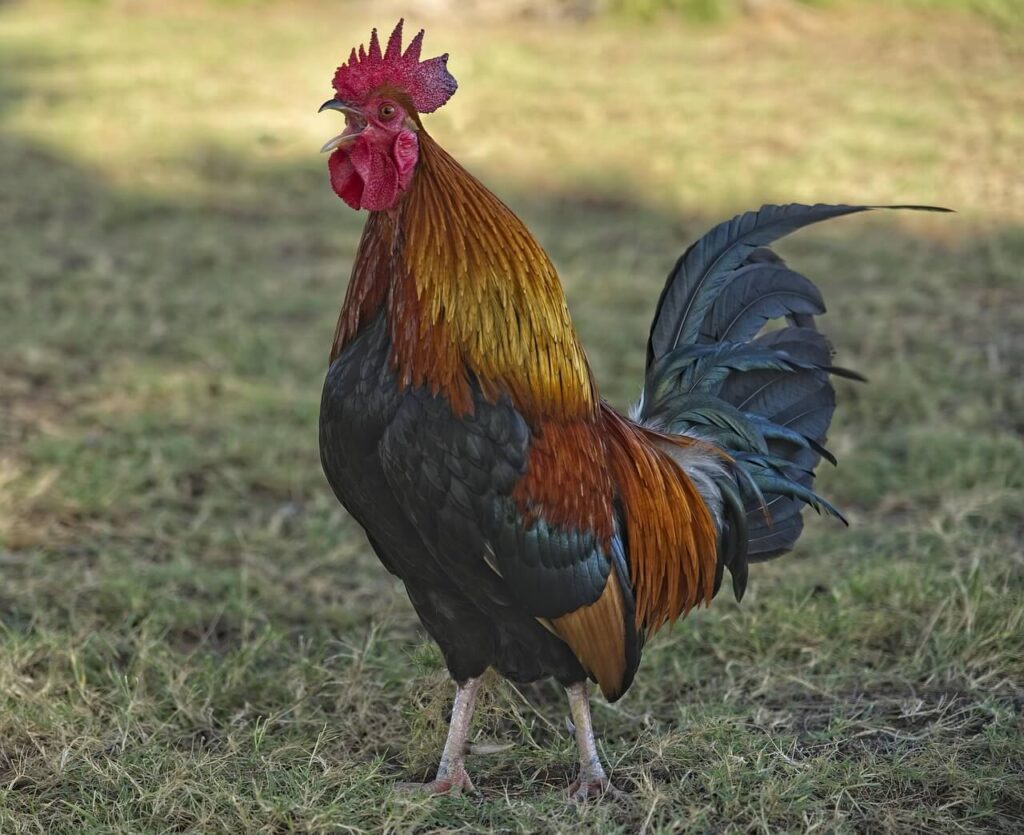
The 1 big question many people ask, and often either love or hate, is why roosters let out such a loud crow that can even wake the dead sound sleepers. From my own experience on a small farm, their main role, besides making baby chicks, is to protect the flock. In fact, many people curious about [how do roosters fertilize eggs] are surprised to learn that crowing is just one part of their natural behavior, along with reproduction and guarding duties.
They really work hard, constantly roaming the perimeters of a free-range territory to guard their hens, and a crow often indicates safety, helps them communicate their dominance, or serves as a warning of danger. While some may like the familiar cock-a-doodle-doo of a cheerful rooster, the incessant crowing can be difficult in urban neighborhoods where it may even be prohibited.
Morning Calls or All-Day Noise?
From what I have seen, roosters don’t just crow in the morning. They do it all the time — in the afternoon, in the evening, and even at night. Often their crowing seems like a way to greet the day, lead their flocks to forage, or give a cue about a boundary.
Sometimes it works as an alert against predators, making it clear that this habit is not only synonymous with the break of day or a symbol of the rising sun but also expands what a rooster symbolize across cultures.
On farms, I have noticed that they start crowing just before sunrise, and it becomes very noticeable in the stillness of dawn. For a rural resident, this daily ritual almost makes the bird an icon. In every scene, the rooster crows at dawn, crossing cultural and geographical boundaries as a harbinger of daylight.
Hearing that classic cock-a-doodle-do in English, or kikeriki in German, or even kuklooku in Urdu, makes me realize how deep this sound runs in different lands, with ko-ke-kok-ko-o in Japanese echoing through biblical scenes and taking top billing in folklore across countless cultures.
Stories give even more depth to this. In Southeast Asia, the Hmong share a tale from long ago, when the world was still new. The sky once had nine suns, making the land unbearably hot. The river dried, the crops began to die, and the people asked their best archer to shoot them down. He did, but the frightened remaining sun hid behind a mountain.
The earth grew cold, nothing would grow, and the people spoke gently, coaxing it back. Neither animals nor songbirds could convince her. Finally, the fearless rooster crowed three times, and the sun rose, leaving a mark of gratitude placed like a glowing bit of sky upon his head. Even today, breeds like the Silkie Rooster carry that symbolic connection, reminding us of courage and renewal.
So why do they get so excited at dawn’s rosy fingers? On a farm, the rooster seems to see it as his job to serve as an alarm clock. He takes it seriously, as if it’s an important duty. The answer may be simpler than we think. The first thing to know is that their connection to the sun is partly a misconception. Sometimes they crow on occasion right at dawn, but it may be pure coincidence, as Pete Alcorn once explained.
Still, they crow at noon and at night, too, not just at the obvious parts of the day with familiar names. For a variety of reasons, I’ve heard them arise and call out hours before light. I can even count on our two — Friday and Tom — to launch into a crowing jag the moment the bedroom light flickers.
Their coops sit fifty yards from the window, but they still detect that tiny flicker from a bedside lamp. For keepers, it’s one of those reminders that roosters are sensitive creatures, and along with their noise, flock health also matters — which is why many farmers learn how to Remove Rooster Spurs to prevent accidental injuries during daily life.
Inside, they are like a bubbling cauldron of testosterone, eager to compete and awaken their hens. The earliest calls usher in a new day, and even a duo of roosters can make the rising initial notes almost jolting. Imagine how it feels for the soundly sleeping hens still roosted nearby.
Over time, I’ve learned that opinion divides into camps. Some people occupy the view that the sun stimulates the call. Others, the second group, have assumed the sun rises because roosters tell it to. Then there are folks with chickens, the third group, who have noticed they usually crow before dawn. Some even joke that maybe the sun rises on their command.
Research helps. Scientists tested this by placing roosters in a controlled environment with artificial lighting. The birds experienced twelve hours of light and darkness. Like clockwork, they started crowing two hours before the lights switched on, showing their biorhythms regulated the timing of calls. Their internal biological clocks were the real secret, not just the visible dawn.
So whether in a farm setting or a city edge, whether in old biblical scenes or in a quiet bedroom, roosters keep the world awake. Their call is both practical and poetic — a reminder of life’s rhythm that humans across cultures have respected for centuries.
Anyone raising chickens can benefit from learning how expert breeders identify strong rooster genetics, especially in famous lines like the Kelso rooster.
Why Do Roosters Crow at Night?
A rooster may sometimes crow in the middle of the night, and this can worry keepers who have spent hours checking their birds in the daylight for any obvious sign of unwellness, carefully observing their behaviour like eating, staying lively, and being a vital part of the flock and its activities.
Healthy roosters often act like a guard dog, ready to protect and watch; their sudden barking-like barks at midnight are usually an indication that someone or something has disturbed the cockerel, forcing him to wake from sleep. I have heard this many times, when the bird quickly sends an alarm against an intruder or predator nearby, reminding us that even at night the rooster’s duty never rests.
How Loud Is a Rooster?
A rooster’s crow is far from gentle; on average it reaches about 80 to 90 decibels, and right next to its head the noise can climb to a piercing 142. For perspective, a chainsaw runs near 120 decibels, so the deafening level of a rooster’s call at prolonged exposure is no small thing.
Yet chickens have a special way to protect their hearing and avoid going deaf: when a rooster opens his beak fully, the ear canals become partially closed, reducing the sound that reaches inside.
The Rooster as Nature’s Clock
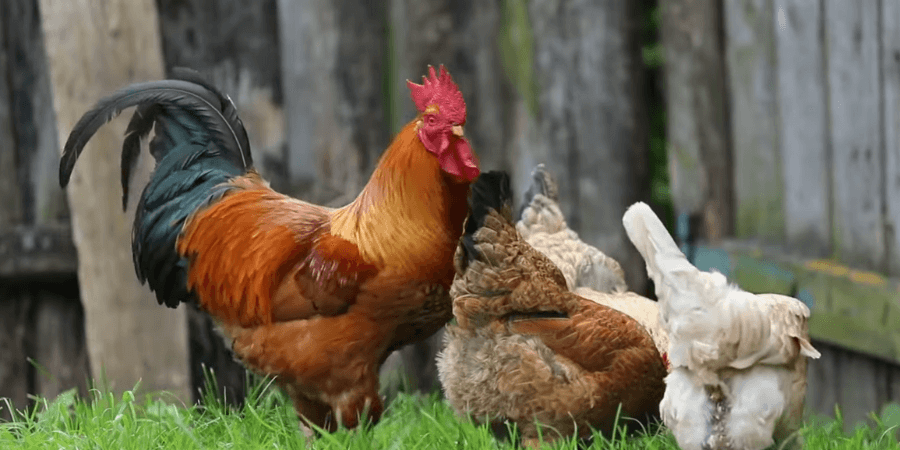
It is no surprise that roosters are infamous for their 5 am wake-up calls, but they actually crow far more often. They call out throughout the day and sometimes at night, marking 10, 12 pm, 3pm, or even 3 am as fair time for a crow.
From a human point of view, this crowing may affect sleep, yet the rooster sees the world differently. An “all clear” cry is his way to announce that all is right around the flocks, a habit that has worked as nature’s keeper of rhythm for centuries.
As a small-scale farmer, I’ve come to appreciate this audible confirmation. When the roosters are calling, things are usually fine, even if it means an occasional disturbance at night. Over time, I’ve learned to tolerate it, because it works as a natural pattern of life.
I’ve watched flocks check in through their own calling, much like texts or phones sending regular assurances to their loved ones that all is safe. Chickens too find it endearing, not a malicious act to disrupt rest, but a way to stay connected.
The rooster’s role as a keeper of the flock is clear when he signals the hens to wake and begin foraging. He often leads the early bird to the worm, the bug, or the fallen apples. After the morning feeding, the flock may settle into sunning, dust bathing, napping, or laying eggs. Yet the rooster will decide when rest is over, giving a call to gather them again.
Even today, I see how this pattern plays out. The rooster’s first crow can set the tone of the day, the flock’s follow keeps life in balance, and the steady rhythm reminds us that his signals are more than noise — they are a living time system written into the natural order.
How Do You Get a Rooster to Stop Crowing?
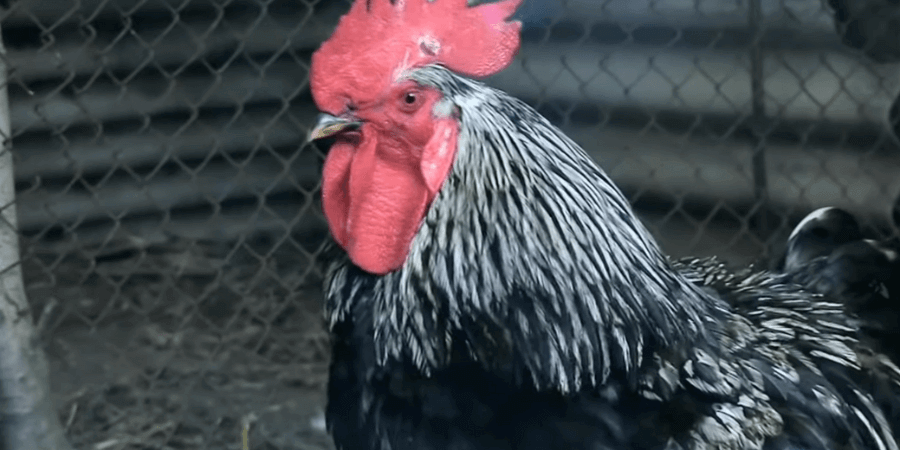
From my own farm experience, the first step is to make sure a rooster’s basic needs are met. Giving him plenty of food and water is simple, but it makes a big difference. A well-fed bird with proper care is often calmer. Adding space to roam around helps too, as it allows him to entertain himself instead of constantly seeking attention through crowing.
If the noise continues, some farmers consider reducing the size of the flock or even re-homing all but 1 rooster. Too many males together can make the situation worse, each one competing to be heard. You can also cover the coop windows to block early light and outside noise, since these disruptions often trigger unnecessary calls.
Another method is to keep your chickens in their coop until late in the morning, making the crowing less bothersome for neighbors. Some even try keeping the bird temporarily in a cage with a low ceiling, but only for a short time — never longer than overnight. This limits how much he can stretch his neck, which reduces the volume.
Finally, I’ve used a no-crow collar to muffle the sounds without hurting the bird. It doesn’t silence him completely, but it helps control the noise. With patience and a mix of these strategies, you can manage a noisy rooster in a way that balances his natural instincts with the peace of your home.
Frequently Asked Questions
What Does It Mean When the Rooster Crows?
A rooster crows as communication to declare territory, announce the dawn, or warn of danger. It helps gather the flock, signal health and presence, and shows how roosters use crowing as a vocal act with clear messages to chickens, proving a dominant role in the group.
What Is the Sound of a Rooster Called?
A rooster makes a noise called a crow, a distinct sound heard at times in the day, night, or morning, used to communicate warnings, assert dominance, and signal territory.
What Triggers a Rooster to Crow?
Roosters crow from a combination of internal biological triggers and external environmental stimuli. Their innate circadian rhythm and clock set a regular pattern at the beginning of dawn, while response to territorial threats, unfamiliar noises, or movement helps them assert dominance, impress hens, and communicate. In young birds, hormonal surges during puberty increase crowing frequency.
How Do I Stop My Neighbor’s Rooster from Crowing?
If a neighbor owns a crowing rooster, you can first try to resolve the issue by discussing it directly. Sometimes researching local animal ordinances helps, or even using a white noise machine to cope with the sound. If the situation remains unresolved, you may contact the authorities or code enforcement to report the problem, since certain laws protect against excessive noise or prohibited animals.
Conclusion
In the end, understanding why roosters crow and how to manage their behavior helps balance respect for nature with the comfort of daily life. Whether it’s their role as a natural time keeper, their instinct to communicate with the flock, or the challenges of dealing with a noisy neighbor’s rooster, the key is patience, awareness, and practical solutions. By learning when and why they crows, and knowing simple ways to reduce the noise, we can appreciate these birds for the vital part they play while still keeping our surroundings peaceful.
Crowing is one of the most obvious signs of a rooster, but appearance also plays a role. If you want to learn how to tell them apart by physical traits, check out our guide on How to Tell a Wyandotte Rooster from a Hen